WELCOME...

Welcome to my food blog Any Tom Yum , Spotted Dick or Haricot Bean...My name is Harriet Jenkins and I work for AB World Foods, a company passionate about flavour and World cuisines. This blog will give you a taster of the sorts of things that i get up to in search of foodie perfection across the globe...

Monday, 7 June 2010

The Food of Mon


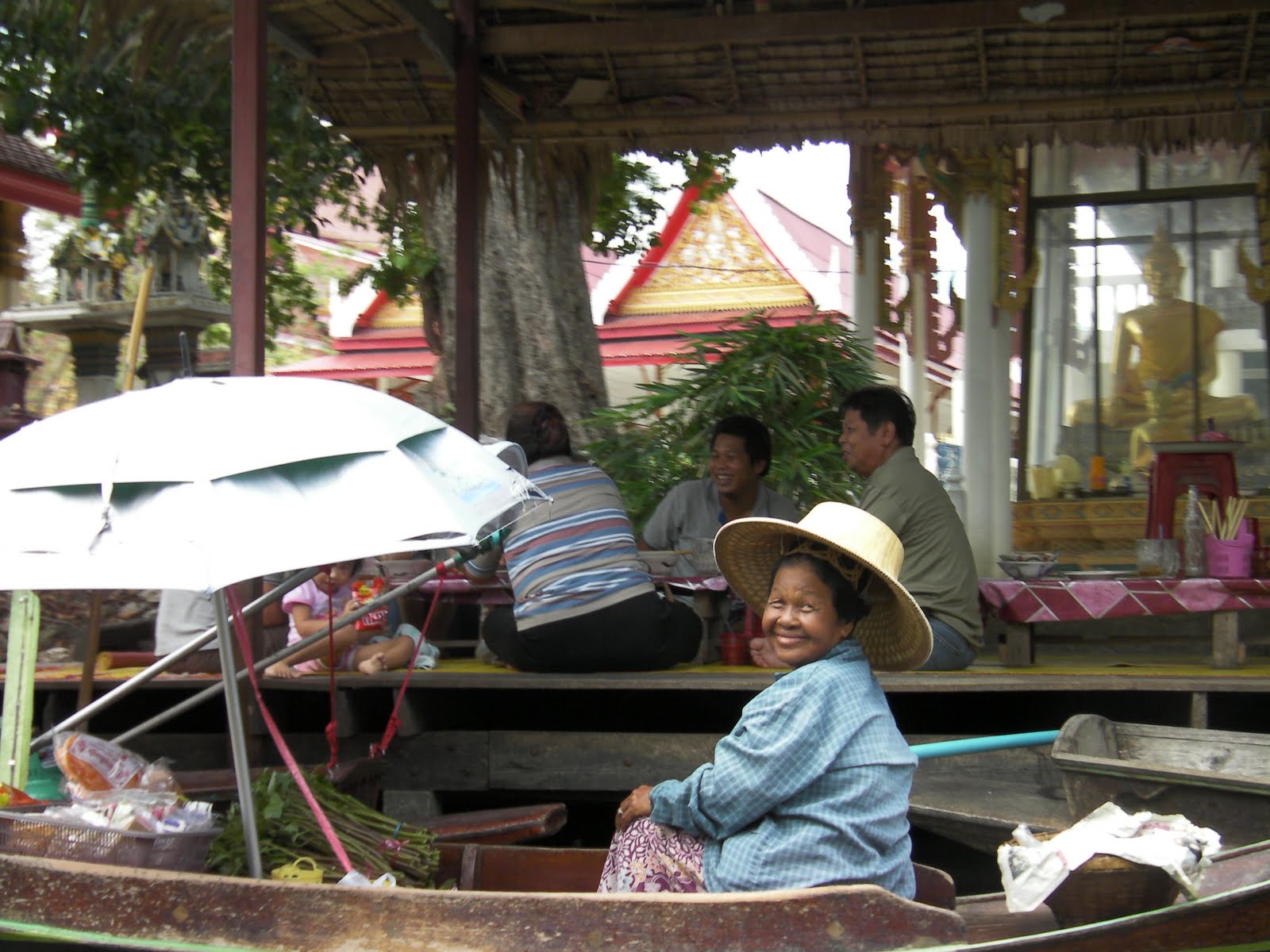
I felt I should briefly write about Mon-style food that I ate when I visited the island of Ko (or Pak) Kret in Nonthaburi, Bangkok. Puwadol took me and as we were dropped on the island I realised it was a very small place. We were greeted by a temple (wat) and what looked like the Thai version of a Moroccan souk. It was here that I was treated (!?) to Mon-style food.

The Mon originated in the Mon kingdom, located near Burma and Thailand to the West of Thailand. Their country was invaded over various centuries by both Thailand and Burma and their kingdom was swallowed up as a result of the skirmishes. The Mon were used by the Thais as labourers/ slaves and were moved to various areas of Thailand. When they received their freedom, they set up small communities and Ko Kret was one of the places they settled.

Mon Food
After weaving our way through covered walkways resplendent with food and knick-knack shops, we found ourselves at a vendor who served the traditional food of the Mon people. It consisted of a small bowl of rice in iced water called Khao Chae, served with various accompanying dishes including shredded candied pork, fish and preserved vegetables. All the accompaniments were overwhelmingly sweet. The iced water is jasmine scented and is imparted with the smoke from candles (rendering it with – I thought – a rather an unpleasant taste of paraffin)! This is traditionally eaten, much like the Japanese and their cold soba noodles, as a cooling dish for the summer months. An unusual lunch…!

Happy Cooking!

HJ

Monday, 24 May 2010

Sichuan vs Hunan; Clash of the Titans


Sichuan and Hunan cuisines are one half of China’s big four; the others being Yue (Cantonese) and Shandong (Beijing). I would say the better half (!) but then I am biased. After eating both of these cuisines two nights in a row, I find it difficult to decide which is the most special – I mean both are pretty fantastic!
Mapo Doufo
Sichuan-style food originates from the West of China in the hills and mountains of Sichuan. The food is quite unique in that it makes use of not only over 20 different cooking techniques (including dry-frying, explode frying etc) but also showcases a flavour sensation known as ‘ma la’ which translated means ‘hot and numbing’. This sensation is created through the use of Sichuan pepper, sometimes called fagara, which is actually a minute husk that is toasted over heat before being ground to a fine powder and sprinkled over many Sichuanese dishes. The flavour is zesty lemon, and the sensation is difficult to describe – I liken it to a cross between Bongela and the gush of your tastebuds when your mouth starts to water…It also makes grand use of the dried Sichuan chilli – both small that are left whole and large that are sliced up into pieces. The idea is not to eat the chillies, they are just there to impart flavour during the cooking process and to make the dish look attractive when presented. Only fools eat them when they reach the table!
Watch the Chinese gingerly pick around them.

Dry-fried Chicken
We ate dry-fried chicken prepared in just this way, mapo doufu (Mother Chen’s Pockmarked Beancurd) cooked in spicy Sichuan chilli oil and yellow bean paste with a touch of minced beef. There was also stewed pork belly served on top of Sichuan preserved vegetables that tasted of cooked and sautéed chard, and steamed asparagus. The first two dishes demonstrated the technique of ‘ma la’ perfectly, whilst the others showed me what other marvellous things Sichuan had to offer.
Belly pork with wheat dumpling breads
In contrast Hunan food shares the similarity of cooking with chillies, but instead of being dried, they are crisp and fresh and used in an entirely different way.
Wood ear Mushrooms with Hunan Dressing
It is the fresh and fragrant combination of chillies, spring onion, garlic and coriander that is at the heart of this cooking – the combination makes fish, meat and vegetables sing. We ate some really special food. We ordered some Wood Ear mushrooms in a dressing of garlic, light soy, rice vinegar, sugar, chilli and coriander and it was delicious. The texture of the mushrooms was crisp and chewy and they were a perfect foil to the softness of the second dish, stir fried egg with chilli and onion.
Stir fried Egg with Onion and Chilli
We also had a beautifully presented dish of firm silken tofu, sliced and served in a similar dressing to the mushrooms, but with spring onion and more chilli. But perhaps the most exciting dish was a fish opened out attractively, garnished with fragrant mince cooked with fresh chillies, coriander, spring onion, garlic and chilli oil. In Hunan circles this is referred to as ‘Squirrel fish’ as it is said to resemble a squirrel (?) but for me the combination of fish and meat, so unusual, is what makes this dish. It was fantastic!
Squirrel Fish
So, which one threw the best punches? Well it’s a toughie. Sichuan has always held a place in heart and I love the unusual ‘ma la’ flavour. However, the lesser known Hunan cuisine, I have to say wins out. The punchiness of the ‘yang’ fresh chillies hit you around the head but are perfectly balanced with the crisp ‘yin’ or cooling note of coriander, which is lacking in Sichuan (or less flavourful as they favour cucumber as the balancing ‘yin’ note). So there it is. Hunan wins – but Sichuan puts up a jolly good fight. Three cheers to the victor….’hip,hip, Hunan’!!!!
Hunan-style Tofu (Doufu)
Happy Cooking!
HJ

Little Venice


It was an experience visiting the waterways of North-Western Bangkok. For centuries the tributaries that flow off the main river in the city, the Chaopraya, have been home to many Thais who see these waterways as their livelihood. It resembled a tropical and lush version of Venice, with the houses perched at the water’s edge. People were going about their daily lives, motoring around on their boats, washing their hair and woks and children playing, all using the water that is integral to the routine of their day-to-day lives. Puwadol and I also visited the floating market where we bought all sorts of yummies including deep-fried bananas, pork on sticks and little cakes made from coconut and palm fruits (which contains natural yeasts that ferment the cake batter and give the little cakes a ‘floaty light’ texture).

This part of Thailand is seen as the best for growing fruit and the best Durian grown here can fetch around £200 – you buy the fruit as a bud on the tree and get to take it home when it is fully grown, spiky and ripe. The best texture for Durian is firm on the outside and soft on the inside and the most popular variety is the long-stemmed species. It tastes good, a bit like roast chestnuts and I think is best eaten when not too ripe (and stinky)! It has a fearsome reputation as the stinkiest of all fruits and is banned on airlines, hotels and public places because of the stench it can give off. But it also inspires the greatest of affections amongst the Thais as the King of fruits and is always eaten alongside the purple coloured Queen of fruits, the Mangosteen, to balance the ying and yang (Durian is seen as hot and Mangosteen, cold). It is quite funny actually, as you do start to feel hot after you have eaten Durian – apparently because it is so high in calories! Not one for those on diets, ladies….

Happy Cooking!

HJ

The Tale of Goldilocks and the Three Stinks…


Gam Som Gung
I was taken to experience Southern Thai food in a wooden house, surrounded by a moat, called Ban Peung Chom. You would think I would have to go to Southern Thailand and the Islands to experience this super-hot, fish based cuisine, but much to my chagrin this excellent restaurant can be found in the sois of Bangkok.


Tord Mun Hua Pee
We chose typically Southern dishes of Gam Som Gung (Sour soup with prawns), stir fried noodles, Tord Mun Hua Pee (deep fried banana flower), Nam Prik Poo (spicy crab relish with raw vegetables), chicken wings with a spicy sweet marinade topped with deep fried cabbage (very Chinese in flavour), and cowslip in Oyster sauce. The principal protein was prawns or seafood such as crabs, as typical from the sea-surrounded islands of the South.

Spicy Chicken Wings with Deep fried Cabbage
All of it was great. I actually expected it to be spicier as Southern food is supposed to be exceptionally hot, with dishes like the Southern Curry with Turmeric topping the Richter scale in heat. But Boworn explained we were eating Southern Thai from the Island of Phuket which meant that it was milder, as it had been influenced by the Chinese Fujian-style of cooking brought with them when they emigrated to this Thai Island.

Nam Prik Poo
My favourite dish by far was the stir fry, or ‘Mung Bean Noodles with 3 Stinks’. I loved it not least because of its awesome name! The ‘3 stinks’ in question were stink beans (that looked like large shelled wrinkly broad beans but tasted strongly, like garlic), pickled garlic and leed tree leaves (pungent, again quite like garlic). It provided the source of many jokes at the table(!) but was in fact a seriously good dish. They make use of the fantastic mung bean vermicelli noodles, that are translucent when cooked, and have a great texture. The vegetables worked will in it, and there was a smattering of cooked pork mince and stir fried egg stirred though it to add interest and texture.

3 stinks stir fry
I enjoyed the meal very much and left feeling pleased that I hadn’t been subjected to bowls of rice porridge (also called Congee, like the real Goldilocks) but had dined on delicious traditional Southern Fayre!

Happy Cooking!

HJ

Breakfast, Thai-style


Puwadol treated me to a Thai-style breakfast and explained that Thais mainly ate rice, soup and noodles first thing in the morning – so in contrast with the West, mostly savoury dishes. He introduced me to flat noodle soup. The flat noodles were square and roll up like cigars when cooked in boiling water. These noodles are then served in a light or dark broth depending on preference. Light is like a clear soup – light and refreshing in flavour, and dark resembles the flavour of Chinese broths with ‘red-cooking’ characteristics of soy sauce, sugar, aromatics like star anise and dried tangerine peel. As a result it is much richer in flavour. We topped the noodles and dark broth with a prinkling of coriander and a mixture of roasted pork, crispy pork belly and various offal (heart, lung, liver, intestine and blood). The intestine was very chewy and as I find with most offal, tasted of its ‘function’! It was an interesting start to the day…

Happy Cooking!

HJ

Thursday, 20 May 2010

Kim Chi, Kim Chi, everyone likes it stinky!


Lady Restaurant Owner
Boworn confessed that as a student, Korean was his dining-out meal of choice. This was because when you order Korean you get about a MILLION other side dishes to pep up your meal, and about two thirds of these are Kim Chi based. His told us that you could get away with only spending 150baht (£3) on one main dish, and everything else brought with it ensured you ate like a king with a good amount of change from a fiver!
Korean BBQ
We ordered some traditional Korean dishes – Seng Deung Sim (sirloin) and Samgyeopsal (pork belly) for the bbq that was set in the centre of the table. Puwadol explained that with Korean dining, the waitress gets involved in the table service and cooking of the dishes. She popped over more than once to flip our pieces of pork and steak over until they were perfectly cooked, and then removed them for us on to a side dish (it was not unlike cooking on Savoyarde Hot Stones in the Alps but without doing it yourself)!
Rice in Hot Stone Dish
We ate this meat wrapped in lettuce leaves with a combination (of our devising) of any number of the complimentary sides that were brought to us. There were at least 4 different types of Kim Chi (preserved vegetables in vinegar and chilli). We had cabbage (traditional), papaya, beansprout and radish versions, which were all delicious. There was also an exceptional dressed salad for everyone, which consisted of lettuce and spring onion dressed with a sour and spicy dressing made with sesame oil, vinegar, sugar, red chilli pounded together. Other sides included deep fried baby anchovies, sliced cooked oyster mushroom, stir fried morning glory, chicken patties and boiled peanuts in sweet soy sauce.

Flat Silver Chopsticks
On top of the meat for the bbq, we ordered a rice dish artfully arranged in a piping hot stone bowl, that ensured part of the rice was crispy and added great texture to the dish. There was also a spicy sour version of steak tartare called Yukhoe, Sour and Hot Kimchi Soup and Cold Vinegery Somen Soup (made with fine buckwheat noodles called Somen). We ate all of this with flat, silver chopsticks that I had never come across before. Apparently they are traditionally Korean and always silver, as the Korean Emporer insisted on using them to identify food served to him that was contaminated with poison!! Luckily all our food was fine…
Yukhoe
While I am on a roll, I feel I should just stand up for Kim Chi for a second. It gets a bad press as a strong and sticking rotten pickle served with Korean food and that is best placed under a bushel and forgotten about. In fact it is delicious – especially when it is prepared and treated with respect. The lady who ran the restaurant we ate in, made all her own Kim Chi, and preserved it for only four days which ensured it retained texture and a strong, but well-balanced flavour. Yum.
Carnage!
Korean’s become all the rage in Thailand as it provides a contrast to Thai, Chinese and Japanese food that have been popular for the past century. It seems Korean is the Thais cuisine of choice for the noughties…

Happy Cooking!

HJ

The Best Pad Thai in Bangkok


Pad Thai is actually one of Thailand’s youngest dishes. It came about in 1916, as a result of a recipe competition held by the Thai Prime minister of the time. He wanted the Thais to make more use of the rice noodle, an ingredient up until that time, favoured almost solely by the Chaozhounese (Chinese) based in Thailand. So the competition was held, and Pad Thai was submitted as one of the many entries. It won with great celebration, as it used the flat rice noodle fried, rather than in soup, as it had previously been used. Since then it has remained a firm favourite in Thailand, and now, across the world.
Original Pad Thai with Flat Rice Noodles
Boworn had been promising to take me to the ‘Best Pad Thai’ in Bangkok for months, so it was with great anticipation that I arrive at the open fronted restaurant on a small soi off Sukhumvit. It was actually quite a modern restaurant and had great heritage; the guy who owns it is not only friends with the Princess of Thailand, but takes his recipes from his Grandmother who cooked for the King at the Royal Palace in the early C20th.

Green Papaya Pad Thai
As with many restaurants, Pad Thai was the only thing on the menu, and it offered variations on the dish including original with flat rice noodles, plain without noodles served with fried wontons, made with vermicelli rice noodles, made with green papaya, made with wheat noodles (Chinese style) and with macaroni (western style). I liked this idea as it shows the Thais open-mindedness about fusion cooking – its given me a few ideas of my own for Thai pasta when I get home!
Roselle and Soda
Ground Peanuts
We ordered Original with flat rice noodles and Pad Thai with Green Papaya. We were also brought a delicious sweet and fizzy drink of Roselle mixed with soda water. The dishes were delicious. The guys in the office swear that the secret to this being the best is the inclusion of picked radish, which adds a unique sour flavour to counteract the sweetness from the palm sugar. The radish along with tofu, dried shrimp, beansprouts are chucked into a scorching wok along with some egg that has been cooked and agitated before hand, to many crispy pieces. It is literally tossed for 1 minute, over a fierce flame controlled by the chef’s foot. The chives, prawns, noodles (or other main ingredient) and sauce(tamarind, palm sugar, lime juice, fish sauce) are added and it is served, with a handful of fresh beansprouts, Chinese chives and a wedge of lime. In the condiments are all the usuals, plus the addition of ground peanuts – essential I think with ground roasted chillies! The texture of both were fantastic – the ingredients remained crunchy but cooked and the noodles retained bite and bounce and weren’t soft, mushy or overdone, which is so important.

The whole experience was fantastic and I vow never to over cook my Pad Thai again!
Happy Cooking!

HJ